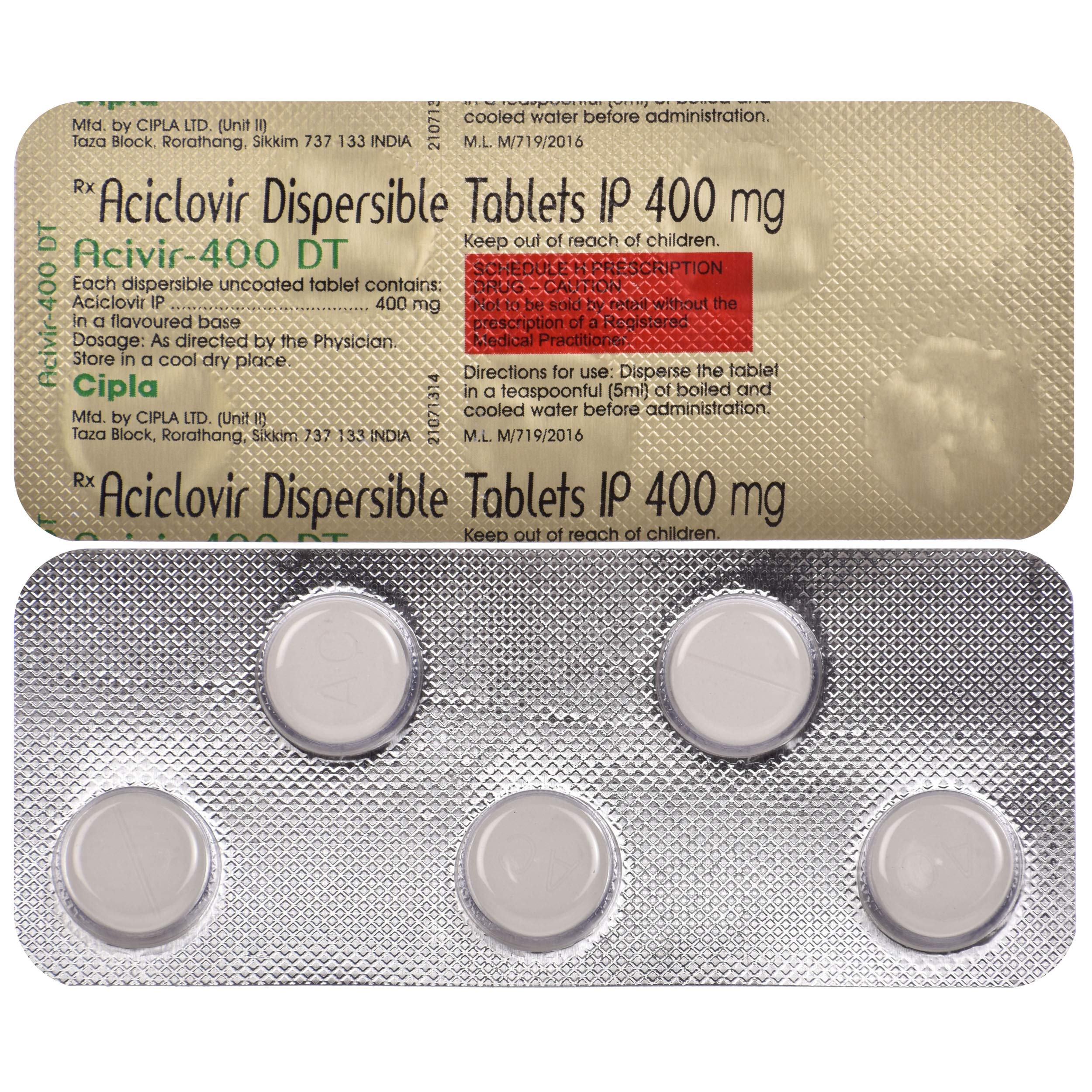
💊 Acyclovir 400mg Tablet
(Antiviral Therapy for Herpes Infections)
🧪 What Is Acyclovir 400mg?
Acyclovir 400mg is an antiviral medication used primarily to treat infections caused by herpes viruses, including:
-
Herpes Simplex Virus (HSV-1 & HSV-2): Causes oral and genital herpes.
-
Varicella-Zoster Virus (VZV): Causes chickenpox and shingles (herpes zoster).
It does not cure the infection but helps to reduce symptoms, duration, and viral shedding, especially when started early.
🔬 Active Ingredient & Mechanism of Action
-
Acyclovir (400mg): A synthetic purine nucleoside analog that gets converted inside infected cells into acyclovir triphosphate. This form inhibits viral DNA polymerase and prevents the replication of viral DNA.
It is selective for infected cells, making it effective with minimal damage to healthy tissues.
💡 How to Use
-
Dosage & Frequency:
-
HSV (Initial): 400mg 3-5 times daily for 5–10 days.
-
Recurrent herpes suppression: 400mg 2 times daily for long-term prophylaxis.
-
Shingles (Herpes Zoster): 800mg 5 times daily (use higher doses).
-
Always follow the doctor’s prescription.
-
-
Administration: Take orally with a glass of water. It can be taken with or without food, but food may reduce stomach upset.
-
Hydration: Drink plenty of fluids to support kidney function.
🤕 Common Side Effects
These are usually mild and resolve on their own:
-
Headache
-
Nausea or vomiting
-
Diarrhea
-
Stomach pain
-
Dizziness or fatigue
⚠️ Serious Side Effects (Seek Medical Help Immediately)
-
Kidney problems: Reduced urine output, swelling in legs/ankles.
-
Neurological symptoms: Confusion, hallucinations, tremors, seizures (especially in elderly or those with renal disease).
-
Severe allergic reactions: Rash, itching, swelling, breathing difficulty (rare).
-
Blood disorders (rare): Low blood cell counts.
🩺 Monitoring & Follow-Up
Monitoring is typically done in:
-
Long-term or high-dose users
-
Patients with kidney disease
-
Elderly patients
Key tests may include:
-
Renal Function Tests (Creatinine, BUN): Acyclovir can accumulate if kidneys are not working properly.
-
Hydration status: Ensuring adequate fluid intake is crucial.
-
Neurological monitoring in high-risk patients (elderly, renally impaired).
⚠️ Warnings & Precautions
-
Kidney Impairment: Use cautiously; dose adjustment may be required.
-
Pregnancy & Breastfeeding: Generally considered safe but should be used if clearly needed.
-
Immunocompromised patients: May need higher or prolonged dosing.
-
Drug Interactions: Caution with other nephrotoxic drugs (e.g., cyclosporine, tacrolimus).
-
Hydration is essential: Acyclovir can crystallize in the kidneys if the patient is dehydrated.
📌 Summary
Acyclovir 400mg Tablet is a well-established antiviral agent used for the treatment and suppression of herpes-related infections such as oral herpes, genital herpes, shingles, and chickenpox. It works by inhibiting viral DNA replication, helping reduce the severity, duration, and recurrence of outbreaks. While generally safe and effective, it should be used with caution in patients with renal impairment, and users should maintain adequate hydration. Side effects are typically mild, but monitoring is important in at-risk individuals.
Note: This information is intended for educational purposes and should not replace professional medical advice. Always consult a healthcare provider for personalized guidance.
Reviews
There are no reviews yet.